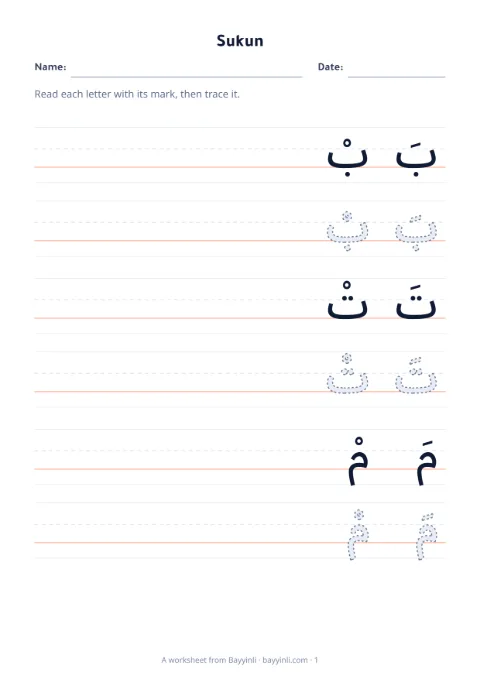
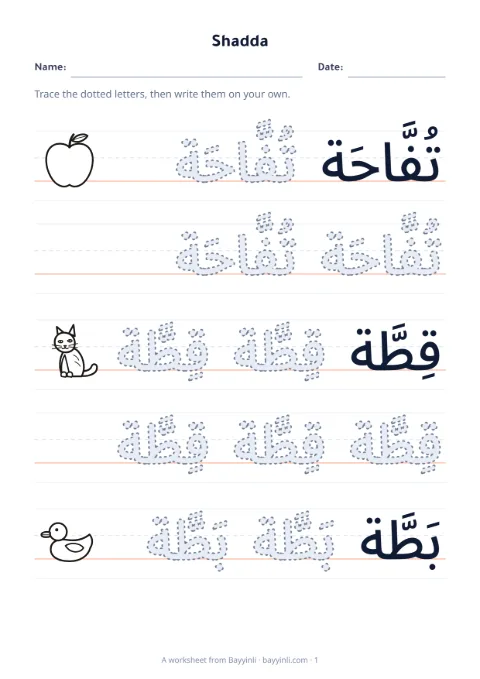
Sukun ْ shows that a letter is said without a vowel, like the mīm in شَمْس. Shadda ّ shows two identical letters written as one: the first without a vowel, the second with one, like the ṭāʾ in قِطَّة.
Sukun: a small circle
A small circle above the letter means nothing follows it before the next letter: in شَمْس no vowel is said between the mīm and the sīn. More words: خُبْز (bread), نَجْمَة (star), مَوْز (banana).
Shadda: a doubled letter
The shadda looks like a small “w”. It doubles its letter: قِطَّة (cat) is read “qiṭ-ṭa”, the ṭāʾ once at the end of the first syllable and once at the start of the second. More words: تُفَّاحَة (apple), سَيَّارَة (car), بَطَّة (duck).
The doubled letter still has its own vowel, written with the shadda: a fatha or a damma above it (بَّ بُّ), a kasra below the shadda or below the letter, depending on the font (بِّ).
Sun letters
After the article الْ, a shadda on the next letter shows that the lām is not pronounced: الشَّمْس is read “ash-shams”. The lām carries no sukun in that case. The sun and moon letters lesson covers all of them.
Worked example
- شَمْسsukun on the mīm
- قِطَّةshadda on the ṭāʾ
- قِطْ ـ طَةtwo syllables: ṭāʾ twice