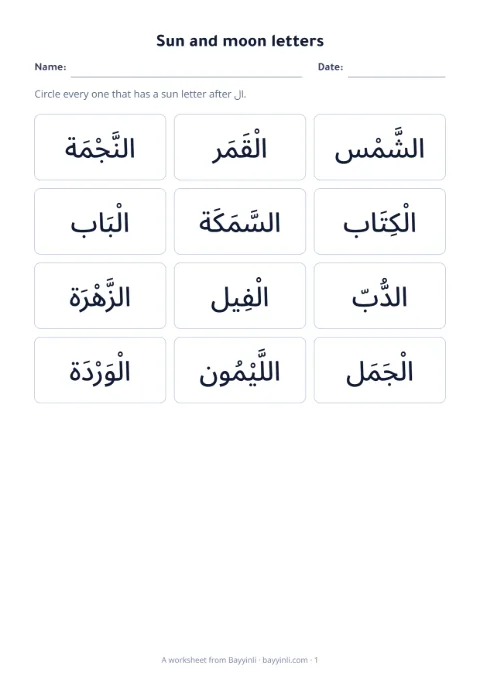
The article ال (“the”) is written the same way before every word, but its lām is not always said. It depends on the first letter of the word: a moon letter or a sun letter.
Moon letters: the lām is said
Before a moon letter the lām carries a sukun and is pronounced: الْقَمَر (al-qamar, the moon), الْبَاب (al-bāb, the door), الْكِتَاب (al-kitāb, the book). The fourteen moon letters are أ ب ج ح خ ع غ ف ق ك م ه و ي.
Sun letters: the lām is silent
Before a sun letter the lām is written but not said, and it has no sukun. The sun letter is doubled, so it takes a shadda: الشَّمْس (ash-shams, the sun), النَّجْمَة (an-najma, the star), الدُّبّ (ad-dubb, the bear). The fourteen sun letters are ت ث د ذ ر ز س ش ص ض ط ظ ل ن. The lām itself is one of them: اللَّيْمُون (al-laymūn, the lemon).
How to tell them apart
In a vocalised text, look at the letter after ال: a shadda on it means a sun letter, a sukun on the lām means a moon letter. Without marks, you need to know the letter. The names come from two model words: the sun, الشَّمْس, begins with a sun letter, and the moon, الْقَمَر, with a moon letter.
A traditional phrase gathers the moon letters: ابْغِ حَجَّكَ وَخَفْ عَقِيمَهُ. Every other letter is a sun letter.
Worked example
- الشَّمْسsun letter: lām silent
- الْقَمَرmoon letter: lām said
- النَّجْمَةsun letter: lām silent
- الْكِتَابmoon letter: lām said