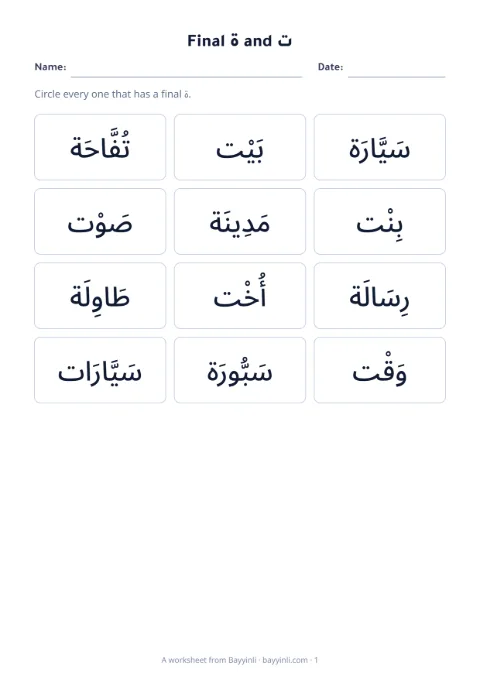
Two letters can end a word with a t sound: tāʾ marbūṭa ة (the “tied” tāʾ, shaped like a hāʾ with two dots) and the open tāʾ ت. To choose between them, stop on the word and listen to its last sound.
ة: you hear h when you stop
Tāʾ marbūṭa only comes at the end of a noun or an adjective. When you stop on the word, you hear h; when the word goes on with a vowel, you hear t: مَدْرَسَة (school), سَيَّارَة (car), هَذِهِ سَيَّارَةٌ جَدِيدَةٌ (this is a new car). It is written joined, ـة, or alone, ة, after a letter that does not join.
ت: you still hear t
The open tāʾ keeps its t sound when you stop. It ends:
- words whose tāʾ is part of the word itself: بَيْت (house), صَوْت (sound), وَقْت (time);
- verbs: ذَهَبَتْ (she went), نِمْتُ (I slept); a verb never ends in ة;
- plurals in ـات: سَيَّارَات (cars), بَنَات (girls);
- some feminine words: بِنْت (girl), أُخْت (sister).
So being feminine does not decide the spelling: بِنْت is feminine and ends in ت. The sentence helps too: in ذَهَبَتِ الْبِنْتُ إِلَى الْمَدْرَسَةِ (the girl went to school), the first word is a verb, so it ends in ت.
Worked example
- مَدْرَسَةة: you hear h when you stop
- بَيْتت belongs to the word
- ذَهَبَتْa verb: ت
- سَيَّارَاتa plural in ـات